A Sandal in Bohemia

A Sandal in Bohemia, by Bill Hartley

The Friends of Hebden Bridge Station have done a good job. Even the disused signal box has had a lick of paint. Along the platforms stand elongated tubs, each with a little notice informing the traveller that they have been planted with ‘wildlife friendly’ flowers. What constitutes their particular amity with wildlife isn’t explained. Presumably in Hebden Bridge a sign advertising their contribution to the planet is considered essential. After all, this is a place with a notice in a shop window announcing that, ‘if we are to save the world we have to start somewhere’. Incidentally the paint job at the station has left the ‘Liberate Palestine’ graffiti untouched.

Just below the station is a very attractive swathe of parkland. On a Sunday afternoon in the summer, people were enjoying the fine weather. A few yards down a footpath amidst fluttering rainbow flags, a thinly attended Pride event is taking place. This was aimed at the kiddies; a handful of bemused under tens were being entertained by a rather insipid drag queen. Hebden Bridge may be a small place tucked away high in the Calder Valley but they are determined to make their contribution to Pride. It may be non league in comparison with the premier league of Leeds Pride but some years ago an act of homophobia was detected and vigilance is seen as essential in this town, which nowadays likes to present itself as an outpost of Bohemia. Indoctrination begins at a young age here. Apart from the event in the park the Gays (or at least the ghastly drag queens) have got themselves onto the curriculum at the local primary school.

The Pennine towns and villages of what used to be called the West Riding of Yorkshire underwent rapid industrialisation in the nineteenth century. Small settlements which relied on sheep farming and hand loom weaving expanded as the mills arrived. There is a long history of non conformity here, ranging from the notorious Crag Vale coiners to the Luddites, who fought a losing battle against mechanisation.

As the mills began to disappear so they experienced a downturn. Curiously it wasn’t the kind of decline one sees today in so many of our towns, with boarded up shops, a drugs problem and other symbols of decay. Rather it was a gentler transition, as if they were simply reverting back to their pre industrial state.

The old mill towns used to be cheap places to live and at one time were well off the grid. As a consequence they attracted some interesting characters. For example, there was a maths lecturer with a dedication to real ale who bought the Rose and Crown in Holmfirth, reputedly for £4,500 and retained its draughty coal fired ambience. Stuart Christie (1946-2020) the anarchist also lived in these parts for a while. Not many people can have studied for their A levels in one of Franco’s jails.  This was a world of pubs with peculiar names like the Slubber’s Arms; a place where they still grew teasles and hunted foxes on foot. Long before the growth of the Green movement hobby farmers could be found living in tumbledown houses with a byre attached, where they could rent a few fields and keep some cattle. It was a world which had adjusted to decline, without acquiring some of the unpleasant features associated with the term today.

These days Hebden Bridge is home to creative and media types who commute by rail to Leeds or Manchester. On weekdays the station car park has a good collection of expensive vehicles.  Just beneath the surface, so to speak, the visitor can see what Hebden Bridge used to be like. These small Pennine towns were once fiercely independent and quite self contained. There are former bank and building society premises with fine sandstone facades, now fluttering with rainbow flags. Along from the old bank and next to a cocktail bar is the People’s Pizzeria, proving that even this kind of humble catering can also be radicalised in pursuit of sales.

Nearby is an estate agent and in its window the transformation of the place is boldly spelt out. One of the more curious architectural phenomena in the town is the under dwelling. The mill owners needed to house their workers and there wasn’t enough flat land to be had within easy walking distance of the workplace. The problem was solved by building one house on top of another. Access to the upper house was via a passage cut through the building. Once the cheapest and least desirable properties in town, things have changed. A merged over and under dwelling was advertised for sale at £475,000, a humble workman’s cottage at £280,000 and a 1970s semi, built out of ersatz sandstone, was offered at £400,000.

The Trades Club is a well known local venue (fully behind the Palestinian cause, naturally). It makes one wonder what the humble artisans who founded the place back in the 1920s might think of it, or indeed the Valley Organics Worker’s Cooperative.  The club is advertising a Northern Soul event. This isn’t an amphetamine fuelled all nighter which veterans of the Wigan Casino might recall. Instead it runs between three and seven pm; more like the hours for a tea dance, which rather misses the point.

Near the Trades Club resides Thich Nhat Hahn, described as a ‘village traditional Zen master’. This is squeezed in near a rather exotic cheese shop which sells more than just a few wedges of Wensleydale.  The shop is conveniently within easy reach of a wine merchant. Not far away is the Earth Spirit shop where among the array of crystals on sale is Aragonite ‘an earth healer’ which ‘combats anger and stress’. Yorkshire folk will be reassured to know that this crystal is attuned to the earth goddess. Clearly all essentials are catered for here.

The late John Morrison, a local writer, satirised Hebden Bridge as a place full of ‘cheery northern folk who are always popping next door for a cup of balsamic vinegar’. He also expressed his surprise that so many shops could survive selling worthless tat and thought the town had become as authentic as one of those old TV advertisements for Hovis bread.

The only time the working classes return in numbers is at weekends: predominantly couples of a certain age who wander about the place serenaded by street corner folk singers. They peer uncomprehendingly at exotic foodstuffs on market stalls, or fend off attempts by blue haired ladies to lure them into shops selling ethic garments. Otherwise the main working class presence is likely to be found waiting on tables in the many tea shops.

Outside its claim to be one big friendly place, a long time resident was quoted in Yorkshire Live magazine as saying that Hebden Bridge was ‘not a town any more’ and that seldom is the local accent heard on the streets. Some hold the view that it is now a place that serves tourists and holiday rentals. Alternative living is available here if you can afford it. The place is often described as quirky but in fact there is an overarching uniformity. Another Yorkshire based writer, Hazel Davies, refers to it as a place of like minded people with the same agenda and adds that whilst it is a good place to live if you fit in, that for all its free living all-embracing pretensions, it is a snob’s enclave.

William Hartley is a Social Historian                              

Posted in QR Home | Tagged , | Leave a comment

Aristophanes: creativity in fifth century drama

ARISTOPHANES: CREATIVITY IN FIFTH CENTURY DRAMA
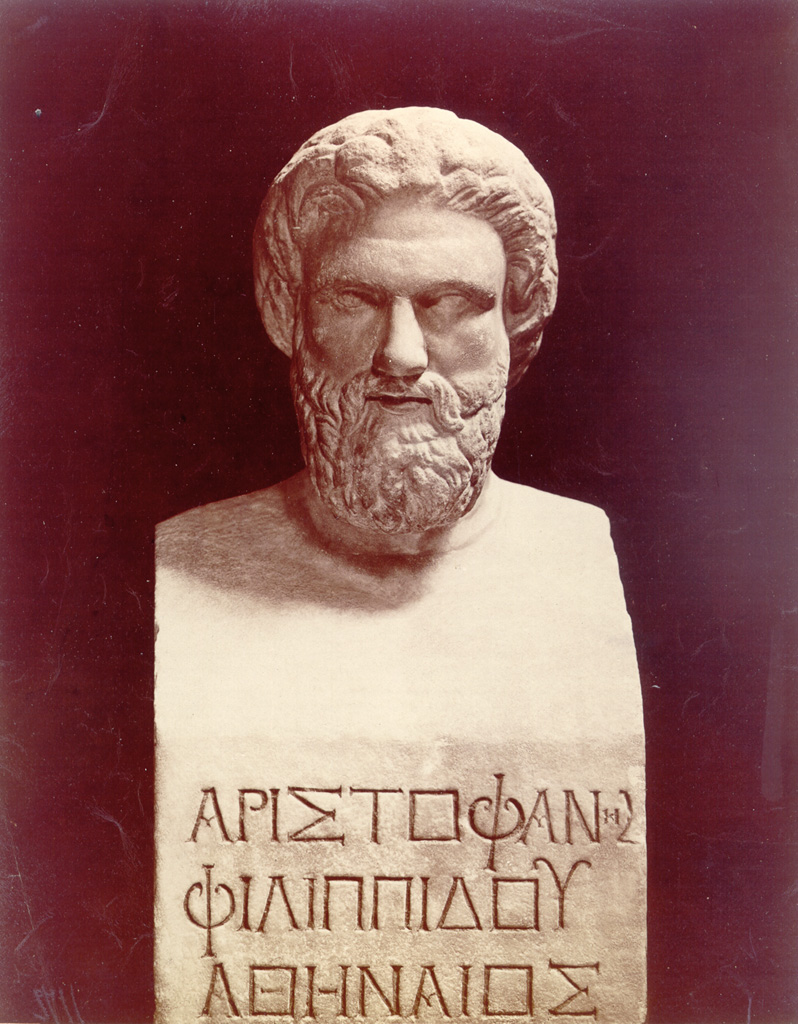
Edd. Dustin W. Dixon and Mary C. English, THE SPIRIT OF ARISTOPHANES. Edinburgh University Press. 2024. Pp. i-xvi, 1-207. £85.00/$104.00 (Hardback), reviewed by Darrell Sutton

According to Aristotle, the design of dramatic plots began in Sicily. Specifics about their origins and production are founded upon conjecture, and points of contact between their derivation and comedic transformations upon reaching Athens are not easy to detect. Historical advancements in later studies of ancient comedy are simpler to trace. In Hellenistic times, the scholars of Alexandria had a hand in shaping the minds of readers who acquainted themselves with the comedies of Aristophanes. Menander’s popularity through citations was more widespread than Aristophanes in the Patristic age. Roman comedies had private readers and were preserved during Medieval period; but Byzantine scholars kept Aristophanes’ memory alive. The Renaissance saw presentations of Roman comedies before select audiences. Greek ideas continued to be inseminated into European minds by academics interested in those texts.

While American classicists focused on grammar, German speaking philologists applied techniques that British classicists happily shunned. By the time Gilbert Murray (1866-1957) offered to the public his book Aristophanes: A Study (1933), the pendulum had swung from the side of principled textual investigations of his comments on humor, religion, war and polity to more nascent academic forms of literary criticism. Evidently nostalgia was in the hearts of contemporary scholars in the West. Eventually a Victorian mindset reappeared, again within the departments of Greek and Roman classics. Classics-in-Translation courses formed the creative framework in which innovative social research began, i.e. critical theories (of gender etc.: e.g. see below T. Travillian, ‘The Body’s Borders: Violation and the Visual in the Carmina Priapea).

Past scholarship, which involved exploring political perspectives, language and persons in Aristophanic texts now are difficult to quantify amid the mass of activist studies of how his comedies were received by men [women too if they were in the audience] in ancient Greece. Longer literary analyses and shorter notes dominate current fields of study of Aristophanes’ Athenian productions and drama in general (cf. chapter 8, Dustin W. Dixon, ‘The Whetstone of Love: Helen’s Blemished Beauty’). In this book also, there are exceptions to this claim, i.e. articles that are first-rate: e.g. chapter 7: Andrew Ford, ‘…Storytelling and the Origin of Religion in the Sisyphus Fragment (43 fr.19 TrGF)’, chapter 10: William Owens, ‘Truth and Narrative in Daphis and Chloe’, chapter 12: James. J. O’hara, ‘What are the Goals of Lucretius’ De Rerum Natura?’, and chapter 13: John Bodel, ‘Not so Funny After All: On Deconstructing (And Reconstructing) the Text of Petronius’ are treats to read.

The volume under review is a tribute to the pioneering and brilliant scholarship of Jeffrey Henderson (JH), who through decades of indefatigable work distinguished himself as a commentator and translator of ancient Greek texts. He is the general editor of the Loeb Classical Library and is the William Goodwin Aurelio Professor of Greek Language and Literature at Boston University. Each article is written by one of his students. Repeatedly, expressions of gratitude to him are noted down because of an author’s appreciation of JH’s pedagogy, as well as his scholarship. There are thirteen chapters.

These papers were presented originally in a 2022 Aurelio conference dedicated to JH. Amy Richlin’s article ‘Female Genitalia Onstage in Aristophanes’ (chapter 1) opens the book. She engages throughout with JH’s scholarship in ‘The Maculate Muse: Obscene Language in Attic Comedy (1971, rev.1991). She displays an instinct for critical insight. But one has reservations. In this genre of texts, which is formally based upon typological study, lexical nuances are only as certain as the interpreter’s perceptions and convictions. The contexts in which she and JH envision find crudity in places Hellenes would have overlooked as nothing more than strained attempts at humor. New realities were created by the scholars’ imaginations. Undoubtedly, decades of etymological review have superimposed upon Greek comedy modern ideas that would seem odd to writers of ancient comedy. Her comments lead to imprecision at times.

In ‘Let Loose the Melodies of Holy Hymns’ (chapter 2), Daniel Libatique discusses ‘the interaction between Aristophanes’ Birds and Sophocles’ Tereus by exploring how Aristophanes’ choices in attributing speech or silence to his characters allow him to flip the hierarchy of power in Sophocles’ play upside down’ (p.20). This piece is well-written, teaching readers inter alia that tragedy allowed for more ‘female speaking characters’ than other forms of drama.

Chapter 3. Mary C. English, in ‘Performing Ritual Sacrifice in Aristophanes’ Peace and Birds’, attempted to do two things at once: (1) explain Aristophanes’ [ir]reverence toward the Gods while (2) giving readers insight into animal sacrifices. Her statements are vague. She does not know where to stand on issues related to comedic civil discourse and the boundaries to which comedy needed to adhere, or if it needed to adhere to any civic rules at all. It is doubtful that comedy offered any ‘fantastic solutions to common problems (p.40) of the day. Another possible kind of irreverence is viewed from the perspective of staging. ‘Will Trygaeus and Peisetaerus actually perform their sacrifices to untraditional gods onstage?’(p.43). The answer from the texts is clear: no, they did not. Fragments used to deduce support for the author’s claims are misjudged and stretched to the limit, so much so that on page 46 fn.34 we have a long analogy of Archie Bunker, from the American TV comedy All in the Family, as a means to understand episodes from Peace and Birds.

Among the hundreds of published papers that explore Aristophane’s political stances through his supposed rudeness and crudeness, I-Kai Jeng (chapter 4), in ‘Political Ambition and Poetry in Aristophanes’ Birds and Plato’s Aristophanes’, believes that Birds ‘is sparse with allusions to contemporaneous political affairs’ and that its ‘political stance is not easy to discern’ (p.49); but he believes ‘it remains a political play’ (p.51). The rationale here is questionable. Moreover, he maintains that ‘The power of language constitutes a significant part of the play’s reflection on politics’ (p.55). The middle paragraph on page 56 lists reasons that lead I-Kai ‘to believe that Birds evaluates certain political methods positively without recommending them in practice.’

On page 54 he referred to ‘signs that Aristophanes in the end prefers political moderation instead of what Birds portrays.’ These fields have been tilled many times before. His interpretative decisions, however, regarding Greek terms often are detached from historical meaning. Since he sees ambiguity in too many places where the lexical data is clear, he leaves little room for establishing confirmable truths.

I-Kai writes ‘Plato’s Dialogue occurs against a background in which a connection between a desire to rule the world and indifference to gods is lurking. This historical background, although barely alluded to in either work, nevertheless appears as fertile ground for exploring human longing and its attitude toward the divine’ – italics mine (p.57). Directed by inconspicuous details, he wants readers to suppose that Aristophanes in Birds and Symposium might be saying ‘opposite things’, but not really. The contrary features can be reconciled according to I-Kai. The conclusions drawn in this article are imaginative, as fanciful as Aristophane’s Speech in Plato’s Symposium.

Chapter 5. Anne Mahoney, ‘Sophocles and Happy Endings’ labors hard to differentiate between tragedy and comedy, citing Plato and the Romans. Sometimes huge difficulties need to be surmounted when tackling a perceivably simple issue. Her knowledge is encyclopedic. It is not farfetched to merely say in tragedy select characters are used to illustrate a variety of discomforts imposed upon them in the play. In a brief compass she proves that happy endings are not antithetical to ‘tragic’ productions. Unlike her view, other inferences may be drawn rather than her suggestion ‘that it may be true that a play whose main characters are of low status is always a comedy’ (P.66). Her paper is well-designed, thoughtful and balanced in its approach to the subject.

Emily Austin, chapter 6 tries a novel approach when attempting to define ‘heroism’ by using grammatical middle voice grammatical terms. In ‘Heroism in the Middle in Sophocles’ Philoctetes’, that character’s pain and suffering is used as a canvas on which to depict him as a man to whom kleos/glory is illusory in normal terms. She is honest when she says, “There is no single verb or noun that describes this kind of ‘middle-voice’ heroism” (p.82). Her view imagines that “these ‘middle-voice’ passages evoke a sense of achievement.’ She concludes her paper by stating she has used “a framework of grammatical ‘middle-voice’ in order to move beyond an active-passive binary in how we view suffering and action on the Athenian tragic stage” (p.87). She has done good work in other spheres; but I was alerted to where this confusing path might take readers at footnote #2, page 76. This theoretical form of middle voice linguistics  misdirects readers away from clear insights and sound philological methods.

Chapter 9. Chris Synodinos, in ‘Virginity and the Post-mortem State of the Body: Reading Mary and Hippolytus in Dialogue’, attempts to “put the figure of Mary in dialogue with representations of the Greek mythical hero”, by presenting some literary correspondence between the two characters. One’s high expectations were met with disappointment. This paper needed editorial revision. Although everywhere there is food for thought, readers will hardly scan ten sentences on any page without an error of fact or distortion of truth disclosing itself. CS begins by asserting that First Corinthians 15:51 somehow is relevant to Mary’s dormition and bodily assumption to heaven (p.119). Another false and audacious claim is made when he argues, ‘that belief in the Virgin’s bodily assumption arose as a corollary of her divine maternity, which is itself inextricably linked to her perpetual virginity – a fundamental conviction of the Early Church and central to major branches of today’s mainstream Christianity’ (p.129). Those Marian dogmas are not in any of the writings of Apostolic Fathers; but in non-canonical texts which he intermingles with canonical ones, leading the reader to believe these beliefs are held wherever the Bible is read and believed, even by Protestants. Not until the Medieval period do these views take formal shape as a Roman Catholic viewpoint, later taking root in a few smaller Eastern Catholic sects. Those notions hardly are “mainstream”. Besides, what do they have to do with classical literary figures? His elucidations of each Greek passage, which is supposedly comparable to Hippolytus’ character, may be safely overlooked.

Tyler Travillian is correct that the poems discussed by him in chapter 11 do not fit the traditional genre of Roman satire; but it is uncertain if they all are political. The Carmina Priapea is a strongly sexually oriented poem. He examines the axioms and witticisms of the CP. It is best to let him speak in his own words. Citing the ‘sensory experiences’ and the ‘all-too-real sonic caresses of the Priapea as poetry’ noted in Elizabeth Young’s article, ‘The Touch of the Cinaedus: Unmanly Sensations in the Carmina Priapea’, TT offers his view:

‘I suggest that another of the senses, the gaze, shows the reader a way to combine and expand on… Young’s readings, which use sexual humor and invective to enforce social norms on those lower in the social hierarchy, and a Subversive Reading that destabilizes and re-evaluates the elite masculinity that the poems at first appear to reinforce (p.145).

He applies this technique vigorously. His translations are apt. But very little historical context is supplied. Therefore, the milieu, as described by the author, is at times enigmatic.  Delving into CP’s mysteries requires clear explication of attitudes of that day, not of ours. The impression given by the author is of an ancient Roman culture in which all behaviour was exhibited unashamedly. Granted, the Romans were not prudes. But the people mentioned in CP are not representatives of society in general any more than the content of this article is accessible or acceptable to readers of Latin in every sphere of modern suburban and rural life.

————–

Some isolated comments. An introductory article on the last 50 years of scholarship on Aristophanes, and JH’s contribution to it, would have been better than the now standard opening pages that tell you what you can expect from each author. Indeed, a critical comparison of JH’s Loeb editions with Alan Sommerstein’s critical edition of Aristophanes (Aris & Phillips) would have been beneficial. Only a small amount of textual criticism is included. How JH engaged the texts of The Bude Aristophane or N.G. Wilson’s OCT Aristophanis Fabvlaeneeded extensive debate. JH’s groundbreaking work on ‘obscenities’ is cited by all who work in this field. Nonetheless, there were no critical analyses of his conclusions in this small volume. Justifiably his students copy him in the use of bawdy language when translating select Greek expressions. Several authors credit JH for inspiring ideas that it seems unlikely that he would have promoted.

In some places, the English glosses overstress for readers what Aristophanes could not have meant. The editors, and several of the authors, love the use of words like ‘subvert’ and ‘subversive’. In their minds Aristophanes’ comedies were always intended to induce far more than humor, as if they were intended to be literary weapons for challenging or overthrowing opinion. Understanding that Greek rulership in the fifth century would suppress ones who would foment revolts should disabuse readers of the insertion of so many subversive texts. Aristophanes did employ ebullient farce in his presentations, which mirrored what he may have deemed perverse societal norms. Comedic remarks were not unlawful unless it seduced people to behave criminally. So much for ἰσηγορία/ free speech! Amy Richlin cited the sexual reversion to conservatism, noted in the early 1990s by JH. That statement is political, scurrilous and patently false. Fornication (free-spiritism) in the USA (or the West) has hardly reversed course since the 1960s. As well, their assumptions are proof of an ivy league line of reasoning that misconstrues the logic behind lifestyle choices of poor or unrefined denizens who live worlds away from liberal academia.

Aristophanes’ showed a fondness for inter-lacing his comedies with his personal views on Euripides. German classical philologists of the 19th century were models of how ancient contexts, when rightly defined, would yield profitable interpretations that are not restricted by modern cultural sentiments. Psychoanalysis can be applied to mental states of scholars who, like his audiences, are fascinated by Aristophanes’ obscenities, and we can look forward to an account of the psychological side effects exhibited by 20th and 21st century students who read the works of the most recent editors and commentators of Aristophanes.

As a piece of research, The Spirit of Athens is helpful for instruction in private tutorials. If lecturers read it closely, by the book’s end, something becomes apparent: the fact that scholars of another generation made use of scholarly tools, arguing toward logical conclusions by distinct means, that are wholly unfamiliar to those trained in the other one.

This review only dealt with issues that seemed questionable. Progress in the study of Old comedy will carry on. Indigestible material aside, several contributions stand out and will be useful for further reference work. The festschrift is misnamed. Most of the papers do not focus on Aristophanes.

Classicist Darrell Sutton is a frequent contributor to QR

Posted in QR Home | Leave a comment

Endnotes

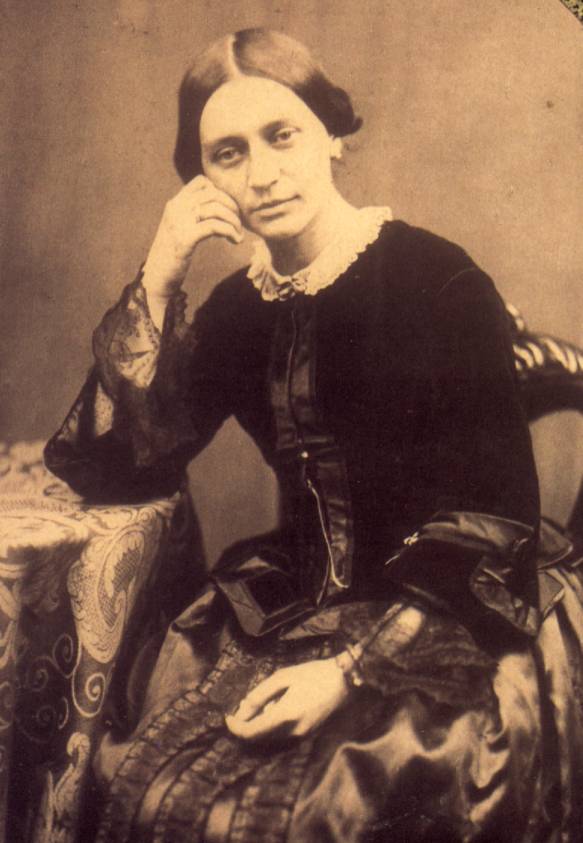
Clara Schumann, credit Wikipedia

Endnotes, January-February 2026

In this edition: Brahms from Bergen, Overtures from the British Isles. Reviewed by Stuart Millson

Recent releases from the Chandos label dominate the first classical column of the New Year – three CDs which exemplify the company’s winning formula of the great classics, mixed with unfamiliar repertoire, but all presented in dazzling sound-quality, with each disc offering richly-informative booklets and impressive cover artwork. British conductor Edward Gardner’s fruitful association with Norway’s Bergen Philharmonic continues with the second and fourth symphonies of Johannes Brahms.

The Symphony No. 2, Op. 73, of 1877 perpetuates all the expansive, sturdy and lyrical qualities so masterfully delivered in the composer’s First Symphony – possibly the most-often-performed of the four, and well known for its Beethoven-like opening, with heavy timpani setting the scene for the struggles to come. Yet Brahms’s ‘Second’ seems to dwell more on inward-looking ideas: more melancholic reflection, with passages that eddy and fade, and reappear, leading into the sunlit space of the joyous finale. Whereas Symphony No. 1 ends in a triumphant outburst – hewn from the hard terrain and tempestuous tides of the first movement – the Op. 73 seems to be running with a light heart and laughter, just for the joy of it, through summer fields. And there is no sign of a thick, orchestral Brahmsian stodginess, perhaps associated with performances of this repertoire from a generation or two ago. Instead, the Bergen Philharmonic seems to embrace all the traditional sonorities of Brahms yet mixed with an agility and sharpness that makes the recording sparkle from the speakers.

The Fourth Symphony is a much darker affair – more the autumnal Brahms – or in the desolate slow movement, an orchestral winterreise in which the music seems to look back over a year that has passed by, or a lifetime; one of those late-romantic orchestral moments when the listener is alone with his or her thoughts, contemplating not just the tragedies and regrets of life, but the passage of time which we must all accept. Brahms, though, has a surprise up his sleeve: the winter idyll is broken by the third movement, marked Allegro giocoso, as if the composer wants to brush away mournful thoughts and return us to the happy uplands at the conclusion of the Symphony No. 2. Again, full marks to the Bergen ensemble for making the heft of Brahms a force which somehow no longer seems daunting or too heavy to bear.

Volume 3 of the Chandos series, Overtures from the British Isles, sees Rumon Gamba bringing into the limelight a whole host of curtain-raisers and mini-tone poems that have, for whatever reason, faded from view. How often, these days, do we hear Havergal Brian, Richard Arnell, Alan Rawsthorne or Daniel Jones? Repackaged by the technology of modern recordings and with new life breathed into them by a sure, suave, sophisticated orchestral sound, we begin to wonder this music does not feature as a normal part of the concert or Radio 3 output. The BBC Philharmonic in its Salford studio pulls out all the stops in Havergal Brian’s The Tinker’s Wedding Overture, relishing Brian’s often eccentric compositional style – humorous, magical, Gothic all rolled into one. From the England of 1944 comes Alan Rawsthorne’s Street Corner, a piece that does in fact obtain the very occasional airing on an oldish Lyrita record, made by the London Philharmonic and John Pritchard – a lively performance; yet it is good to hear the work in full digital detail courtesy of Chandos. The action and atmosphere (for me) suggest one of those great old 1940s or ‘50s films, set in Soho, or some other risky part of the metropolis; and a scene filled with actors such as Sidney James or Sydney Tafler, with the rumbustious life of London played out to the full. Four years later, Robin Orr’s overture, The Prospect of Whitby, conjured an olde worlde dockside London, and the famous pub that witnessed the river traffic and trade of the Thames – and the execution at the beginning of the 18th century of the pirate, Captain Kidd. Kidd’s Scottish heritage undoubtedly appealed to the Angus-born composer, who went on to play a leading role in music education in Britain; and with conductor, Sir Alexander Gibson (Scottish National Orchestra, Scottish Opera), an initiative to champion contemporary music north of the border.

Richard Arnell’s overture, The New Age, was performed about ten years ago at the English Music Festival. The inclusion of the work in this collection is therefore welcome, and sheds some light on a man who, just before World War Two, believed that there was no hope for Britain or the Old World, and made his home in the United States. The overture was played at Carnegie Hall two years before America entered the war and seemed to show the radical new side of English music. Arnell, however, seemed to have a touch of fondness for this motherland across the ocean, and dedicated the work to his “friends in England”.

The music of Welsh composer, Daniel Jones, was last heard at the Proms in 1982, the (then) BBC Welsh Symphony Orchestra performing his Dance Fantasy. Jones, a friend of Dylan Thomas, was present for the performance, but despite his extensive symphonic and chamber output – Chandos recorded a landmark set of his String Quartets – his name is not well known to audiences. Again, this needs to be remedied, and what better way to give the Pembroke-born composer the recognition he deserves than by playing the 1942 Comedy Overture, so expertly handled here on the new disc by Rumon Gamba. Yet this is no raucous romp, or harlequinade, but a surprisingly understated work: wry humour and observation, very much to the fore, with a Welsh sea-breeze gently filling the sails of this six-minute-long miniature delight.

With the Proms now including commercial pop – a segment in the programme that should, of course, be given to classicalmusic; and Radio 3 playing excerpt after excerpt from the output of the little-known American composer, Florence Price – pleasant enough pastiche-music, but hardly warranting such exposure on the network – we need to ask why our country seems to set so little store in its own native musical heritage? The BBC’s own Philharmonic Orchestra has been employed to perform the Chandos selection of British overtures. Surely the orchestra’s management and programme-makers must now use the opportunity to bring such neglected pieces into the mainstream repertoire.

Stuart Millson is the Classical Music Editor of The Quarterly Review.

CD details: Brahms, Second and Fourth Symphonies, Bergen Philharmonic/Gardner, CHSA 5248; Overtures from the British Isles, BBC Philharmonic/Gamba, CHAN 20351.

Posted in QR Home | Leave a comment

Relic to Lifeline

                  Relic to Life line, by William Hartley

Aqaba in southern Jordan is a place where borders come together. Twenty mile to the south is Saudi Arabia. Across the gulf Egypt is a ferry ride away and via a short taxi journey, the Israeli town of Eilat.

Out at sea an Israeli warship may be seen steering a leisurely course across the gulf before back tracking. Presumably its job is to act as a radar sentry. Until September this part of the Middle East had been peaceful, before Houthi rebels in Yemen launched a missile attack on Eilat causing civilian casualties. October 7th brought a repeat. During the afternoon people in Aqaba witnessed Israeli anti aircraft missiles heading skywards. This time four drones had been launched from Yemen. One was destroyed as it flew up the Red Sea and the other three were hit over Eilat. The attack showed that nowhere in the Middle East can be entirely free from conflict and this instability must be a major factor stifling development.

Above Aqaba flies the flag of the Arab Revolt. At one time the 430 feet high flagpole was the world’s tallest and acts as a landmark at the head of the gulf.  Below it is the fort taken by TE Lawrence and his Arab irregulars in 1917. Aqaba then provided a base via which the Royal Navy supplied the revolt. It was perhaps the last time that this port city was of direct military value. Today being Jordan’s only seaport, its significance is economic and the potential is considerable. But to achieve this and access to the vast markets further north requires stability and therein lies the problem. More than a century ago there once existed the means to move goods quickly and efficiently throughout the Middle East. Today borders and continuing instability combine to challenge the prospect of a return to that era.

On the 28th September 2025 a ‘memorandum of understanding’ was signed by ministers from Turkey, Syria and Jordan; the aim being to reopen the Hejaz railway. As one cynical journalist recently pointed out, there has been a blizzard of similar agreements over the years but little has actually been achieved. The remains of the railway are a monument to what was once possible and how much better things might be in the region if it was brought back to life.

Conceived by the Ottoman Empire of Turkey, the plan had been to run the railway from the Haydarpasa station in Istanbul to Mecca, though this never quite happened. Built between 1900 and 1908 the line actually began in Damascus and ended in Medina about 211 miles short of Mecca. Even so the route covered over 800 miles and was an astonishing feat of engineering, whose further development was curtailed by the First World War.

The original idea was political rather than economic: the aim being to facilitate pilgrimages to Muslim holy places in today’s Saudi Arabia and of course improve Ottoman control over the more distant provinces of its empire. With the railway operational, Damascus an ancient trading post on the Silk Road, soon became a pivotal point on the network, as its potential began to be realised. By 1914 Haifa in present day Israel had been connected to Damascus and there was also a French owned branch running eastwards from Beirut. Further south Amman was linked to Damascus; a development which revitalised what was to become the capital of Jordan. Previously it had all but been abandoned. In short, the Mediterranean and Red seas were brought together without the need for goods to travel through the Suez Canal.

Arguably the key to reviving the Hejaz is Aqaba. In 2006 the port was relocated south from the city centre to access deeper water. It is now a modern container port which is the main economic driver for Jordan and also handles trade from Egypt via the ferry link. There has been a surge in the amount of container traffic passing through the port: the first eight months of 2025 saw a 19% increase on the previous year. Aqaba has the potential to help revitalise much of the entire region.

There are or rather were two railways operating in Jordan, both of which are direct descendants of the Hejaz. The only one of these still working connects the capital to three outlying towns and is a narrow gauge railway which operates only occasionally. Until 2011 there was a connection through to Damascus but this ended with the outbreak of the Syrian civil war. In the south a non-contiguous section hasn’t fared much better. This was a mineral line used to transport phosphates to Aqaba and operations ceased in 2018. Indeed, for a traveller in Jordan the only sight of a railway may be on the way to the airport in Amman. Here the motorway goes over a bridge and below, half obscured by desert sands, a section of track can be seen.

Lawrence and his irregulars weren’t the only ones to have damaged the line. Out in the Jordanian and Saudi deserts treasure hunters searching for gold allegedly left by the retreating Turks during the Arab Revolt, has led to destruction of tracks and stations. Rails have also been pilfered for scrap and the Syrian civil war has caused damage to buildings. Some parts of the infrastructure have, however, survived rather better. Since access to concrete was limited many bridges and over passes were built from carved stone and are said to have survived unscathed. By 1920 though, most of the route had been abandoned. What remained in operation was just a fragment of the whole.

In a recent article published in the journal of the Royal United Services Institute, Dr Serhat Erkman described transition to stability in Syria as ‘slow and uneven’ and noted that there are still parts of the country controlled by militants, who didn’t participate in the recent general election. Added to the mix is the continuing Russian presence in the country. There is one bright spot. After a gap of eleven years goods traffic carried by road is once more moving south to Aqaba, hinting at what might be possible.

The starting point for any renewal of the railway is the Turkish pledge to restore 30 kilometres of missing track and infrastructure. Jordan is to explore its ability to once more run and maintain locomotives and rolling stock for a revival of the Amman-Damascus section. There has been no mention so far of links to the Mediterranean. The last train out of Haifa to Damascus ran just a few hours after the Six Day War started in 1967.

Clearly getting investors to help fund the regeneration of the Hejaz is dependant upon an improved security situation, notably in Syria. This would provide an economic lifeline via jobs in rail reconstruction. A shared future in transportation between Syria and Jordan would be soft power in action, functional not ideological.

William Hartley is an incorrigible globetrotter

Posted in QR Home | 1 Comment

I’m Afraid You Can’t Do That Hal

Georg Baselitz, Man of Faith

I’m Afraid You Can’t Do That, HAL.
By Hadrian Wise.

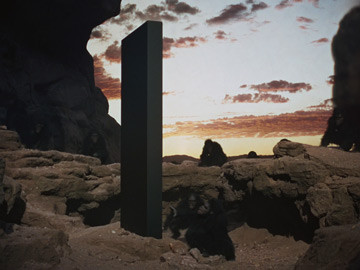
There is no more vivid dramatisation of the potential dangers of Artificial Intelligence than the moment in 2001: A Space Odyssey when the ship’s computer, HAL, refuses to open the pod doors to let the astronaut, Dave, back on board. “I’m afraid I can’t do that, Dave,” HAL says in his affable if metallic way, explaining that his instructions to maximise the probability of the mission’s success are best carried out by eliminating the ship’s unreliable human element. Stanley Kubrick released the film in 1969, and in the years since then, fears about super-intelligent computers with minds of their own defying and harming their supposed human masters have grown more shrill with the development of the technology. When Deep Blue defeated Kasparov in the 1990s, and Alpha Go found a way to beat the world’s best Go players 20 years later, there was an understandable sense that it was only a matter of time; now that Chat GPT can write better essays than some students, many wonder if the so-called “singularity”, the moment an A.I. system becomes in some general sense equivalent to the human mind, is imminent. But what does “equivalent to the human mind” actually mean? If it involves a machine’s being able to think and learn independently like a human, to make its own decisions, to be aware of its own mental life, to have a “mind of its own”, then we can say in summary it means – to be conscious. That would be the singularity.

The most widely known suggestion for determining whether an A.I. system has reached the singularity is the Turing Test, proposed by the British mathematician Alan Turing. If the output of a machine becomes indistinguishable from the output of a human mind – if we cannot tell whether we are talking to a machine or to a human being – then we can say the machine is to all intents and purposes equivalent to a human. If that is the test, we are indeed frighteningly close to the singularity and may well have reached it already. But it doesn’t take long to see that the Turing Test is inadequate, and if it weren’t for Turing’s immense and deserved reputation as a genius, hero and martyr to anti-homosexuality laws, his “Test” would have been consigned to the dustbin of history’s worst ideas long ago. All the Turing Test covers is how well the machine can simulate the output of a mind. But simulating the output of X is not the same as being, or even being equivalent to, X. Simulating a conscious being does not make a machine a conscious being, any more than repeating what my grandmother says makes my grandmother’s parrot an English-speaker. Just because a computer can simulate consciousness, does not mean the computer is conscious.

The most celebrated illustration of this crucial point is John Searle’s “Chinese Room” thought experiment. Searle, one of the greatest philosophers of the last century, asks us to imagine we are in a room with a slit in the wall through which people are posting squiggles we don’t recognise, these squiggles being, unknown to us, characters in “Chinese” (he does not specify which dialect). We have a pile of squiggles of our own, also, again unknown to us, characters in Chinese, and our job is to post back squiggles in response to the squiggles we receive. We have no idea what any of the squiggles means, but we do have an instruction manual, which tells us which squiggles to post back in response to whichever squiggles we get. By using the instruction manual, we are able, without knowing it, to post through grammatical sentences in Chinese that are reasonable replies to the sentences being posted to us, so that the people on the other side of the wall, who do understand Chinese, perceive us to be carrying on a conversation with them. Yet we do not understand a word of Chinese.

This, Searle says, is the condition of the digital computer. It produces content without knowing what that content means. It has syntax, but no semantics. It places symbols in a particular order according to instructions – its programme – without knowing, or needing to know, what those symbols mean. Deep Blue can manipulate enormous quantities of symbolic representations of moves in chess at incomparably higher speed than Garry Kasparov, but unlike Kasparov, Deep Blue does not know it is playing chess, let alone anything else. If the fire alarm goes off in the middle of the game, Kasparov’s chances of surviving any conflagration are far higher than Deep Blue’s.

We have not managed to build a digital computer advanced enough to overcome these problems. Are we ever likely to? Searle’s answer is we shall not, because we cannot, by definition. Could Searle be wrong? Could computers as we know them, digital computers, become conscious? We might be more confident if we could show that the human mind was just a very sophisticated digital computer, because in that case, we at least have an example in nature of a conscious digital computer. And as it happens, there is a long-standing well-supported case in the philosophy of mind that yes, the human mind is indeed a digital computer, and if we accept that the mind is conscious – and believe it or not, there are some philosophers and neuro- scientists who refuse to grant this, but we shall ignore them for now -, then we cannot say a digital computer can never be conscious, because we have a clear example of one that is. We don’t, of course, understand exactly how it works, but that is just because it is a fiendishly complicated digital computer.

You might think this hypothesis, known as mechanism, is on the face of it rather implausible. The other digital computers we know about, which we consider primitive by comparison with the human mind, seem to be an a lot better at doing sums than the human mind is. On the other hand, the human mind is able at an early stage of development to guide the body around a room without bumping into things, something non-human computers still find impossible. But these objections are not decisive. In principle you could have a digital computer that was bad at sums and good at navigating a room. The decisive argument against mechanism is J.R. Lucas’s “Godelian argument”, which goes like this. A digital computer is an instantiation of a formal logical system. This is uncontroversial. Godel’s incompleteness theorem – which, again, while extraordinary, is uncontroversial – holds that in every consistent formal logical system rich enough to accommodate simple arithmetic – which the human mind of course can also do -, there are formulae that are true, yet unprovable within that system, which given that “truth”, in a consistent logical system, means provability-in-the-system, is strange. These are formulae of the type, “Formula 17. Formula 17 is unprovable in the system.” Now if that formula is false, it would be provable in the system, which would make it true – but then it would be true and false at the same time, which is impossible. So it must be true. In which case, it must be unprovable in the system, which means the system cannot produce it as true. But you and I – we can see it is true. And this, however insignificant, is a clear difference between us on the one hand, and the formal logical system, the computer, on the other. As Godelian formulae can be constructed in any consistent formal logical system, it follows that no such system can be a complete model of the human mind, meaning no computer can be a human mind, meaning the human mind cannot be a computer.

There is one caveat. Godel’s theorem applies to consistent systems. Could the human mind be an inconsistent computer? This is plausible if we use the popular sense of “inconsistent”, but in its more specialised sense in formal logic, “inconsistent” means something more than just sometimes contradicting yourself. It means not caring that you’re contradicting yourself, even when it is pointed out. Perhaps Donald Trump is an inconsistent computer? Human beings, by and large, implicitly understand what it means to be consistent and aim to be consistent, and try to iron out inconsistencies when identified. Inconsistent computers, instantiating inconsistent formal logical systems, do not. So it seems implausible that we are inconsistent machines, and the hypothesis we are consistent machines founders on the rock of Godel’s theorem.

Thus, to sum up, if we accept Searle’s characterisation of digital computers it seems implausible they could ever be conscious, and if we cannot overcome Lucas’s Godelian argument we cannot adduce the human mind as a concrete example of a conscious digital machine. But of course, digital computers are not the only type of computer. There are now quantum computers. Could they one day become conscious? The honest answer is we do not know. It is simply too early to say. In the meantime, we can ask, where are all the new antibiotics? If quantum AI were making progress, the one thing we might expect it to be doing is coming up with new antibiotics. We are always being told this is one of the things AI will do for us, so if these exciting new quantum computers are so much better than the primitive old digital ones – where are the new antibiotics? Draw your own conclusions.

None of this is to say AI is nothing to worry about. There is plenty to worry about. The impact on jobs, for example. Even without being conscious, AI could replace and is replacing a lot of the work done by human beings, which we shouldn’t find surprising, since after all, as Dr Johnson said, “It is remarkable how little the intellect is engaged in the discharge of any profession.” Now if our corporate masters and government were agreeable, we could perhaps just find a way to tax the robots and usher in mankind’s long-yearned-for Age of Leisure, but unfortunately that is a big if. Then there is the problem of potential over-reliance on a technology that despite its name, is not in the true sense of the word intelligent, and which has no common sense. If we weren’t alive to the danger of assuming computers are always less fallible than human beings, after the Post-Office-Horizon scandal, we certainly are now. There is the potential for a deadening effect on free thought. Chat GPT and other AI applications are essentially enormous databases containing sentences written on the Web, and they construct sentences by selecting the statistically most probable next word from the database. It is not hard to see how this might reinforce a certain uniformity in a way analogous to the way social-media algorithms tend to distil an individual’s interests into a concentrated feed. What about AI weapons systems with insufficiently precise instructions on whom to target and whom to leave alone? Or indeed instructions that are all too precise? Or the real worry might be that the potential of AI has been over-hyped and we are looking at a gigantic “bubble” that will wreck economies around the world when it bursts. But barring that, machines with enormous computing power that lack the responsiveness to circumstances that comes with consciousness have, in short, all sorts of dangers of their own. I am sure that we can all think of several.

Hadrian Wise is a frequent contributor to conservative journals

Posted in QR Home | 1 Comment

Endnotes, November-December 2025

Endnotes, November-December 2025

In this edition: Siegfried Wagner conducts his father’s music  *  Sir Adrian Boult conducts Berg and Vaughan Williams  *  A Miracle in the Gorbals  *  Clare Hammond plays 20th-century British music

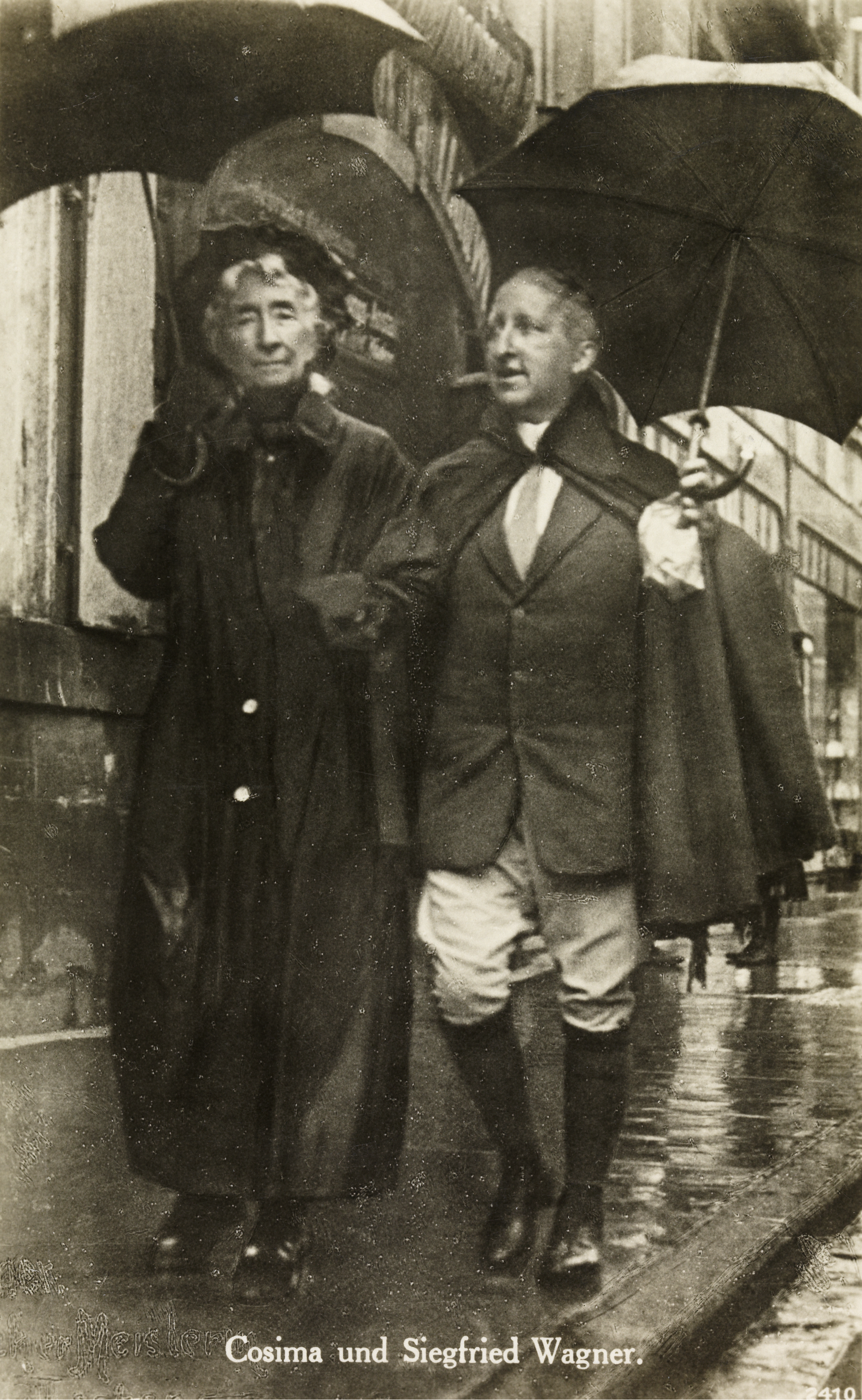
Not content with bringing devoted listeners of the late-romantic repertoire vintage Bruckner, SOMM has now come forward with what can only be described as a masterpiece of musical time-travel: a two-CD set of Wagner’s music, recorded in the 1920s, and conducted by his son, Siegfried. We have all listened to the famous Siegfried Idyll – that enchanting Christmas serenade by Wagner to his wife and baby son (the work’s dedicatee, born in 1869) – so it is hugely exciting to find a real, tangible contact with that Wagnerian past, in the form of this audio-restored, cleaned-up and curated collection presented by sound-engineer, Lani Spahr, and producer, Siva Oke.

The discography, marshalled for the CD, comes from the earliest time of electrical recordings – from Parlophone, Columbia and HMV – so the listener will hear Berlin State, Bayreuth and London Symphony Orchestra players, clustered around the primitive equipment of the time, in what will seem to us in the digital age, a dry, even crackly sound-world. Yet such thoughts soon dissolve, as you concentrate on the musicianship, the slowly-unfolding and undemonstrative interpretations under Siegfried’s baton – in short, the type of Wagner performance of a century ago, and longer.

The disc begins with the Entry of the Gods into Valhalla from Das Rheingold, the first opera in The Ring cycle; then, The Ride of the Valkyries and Magic Fire Music from Die Walkure. The Good Friday Spell from Wagner’s last opera, the mystical Parsifal makes an appearance, too; with the second CD opening with the Siegfried Idyll. As Robert Matthew-Walker comments in the CD booklet (quoting George Bernard Shaw): “Siegfried Wagner did not take command of the army, like Hans Richter… but simply gave the orchestra plenty of time… It was a joy to see how he got the very best out of his players.” And that is precisely the feeling that emanates from this collection: Wagner that grows on you, that seems to take longer, lingering in the mind after the works have ended.

Extracts from Lohengrin and Tannhäuser, the monumental Prelude to Act 1 and Liebestod from Tristan and Isolde(orchestral version) take us through to the CD’s finale, Siegfried Wagner’s very own opera of 1899, Der Bärenhäuter (The Bearskin) – a Brothers Grimm fantasy, set at the time of the Thirty Years’ War, and involving a good measure of tavern, hunting scenes and ghost stories. Siegfried, just like his illustrious father, was steeped in Teutonic tradition, but his music seems to owe more to, possibly, Weber, or the world of Hansel and Gretel, than to the higher-myths of the Rhine and Valhalla. A thorough recommendation from The QR, and perfect listening for the inwardness of winter and Yuletide evenings.

More historic fare, this time, a landmark performance (from recordings in the Harwood Collection) of a March 1949 Royal Albert Hall performance of the post-Wagnerian, post-Mahlerian Alban Berg’s troubling opera, Wozzeck – a story of the mental and physical disintegration of an soldier (the role sung by Heinrich Nillius), now living a life of penury, but who is heading inexorably to a scenario of murderous horror, having suspected the girl upon whom he is fixated – Marie (Suzanne Danco), another inhabitant of this world of squalor – of unfaithfulness. Having been used for a medical experiment by a Doctor (played by Otakar Kraus), Wozzeck truly symbolises the “abyss of man”, his mind unravelling in hallucinations and jealousy, and in the penultimate scene of the opera, “a blood-stained moon” conveying the half-world and half-light in which this saga exists. But what makes this CD so eye-catching is the fact that it is conducted by Sir Adrian Boult, a figure we tend to associate with the blue-remembered hills of Elgar and Vaughan Williams. Like Sir Henry Wood before him, we forget that our English conductors were as a radical as they were conservative, and blazed a trail in their own right for new music.

Stravinsky’s Capriccio is also featured on the disc, in a performance with Boult and the BBC Symphony Orchestra, and solo pianist, Noel Mewton-Wood, recorded in BBC studios in 1948. And the collection ends in expansive style, with Vaughan Williams’s Symphony No. 4 in F minor, a fraught, torrential, turmoil-filled inter-war work that seems to be by a different composer altogether from the writer of The Lark Ascending. Occasionally, though, a glimpse of the pastoral England can be heard in the Fourth, but a landscape seen, maybe, through Wozzeck’s eyes: a countryside with a slate-grey sky and a febrile tremor in the mind and in the distance… Recorded on the 21st July 1965 at the Royal Albert Hall, the Proms audience gives a magnificent ovation to the Royal Opera House Orchestra conducted by Sir Adrian.

Music by Bliss, next: the 1944 ballet set in the backstreets of Glasgow, Miracle in the Gorbals – a piece with all the disembodied, jagged social scenery that you find in Berg’s Wozzeck – suicides, prostitutes, strangers and streets paved with danger. Conductor Michael Seal (himself once an orchestral player) brings the score to dazzling life in a thrilling performance with the BBC Philharmonic Orchestra in Salford. Chandos sound-engineers win yet again with their state-of-the-art sound, which serves well the late masterpiece by Bliss, his 40-minute-long Metamorphic Variations (1972 – first given in 1973 under the baton of Vernon Handley), which begins with an unforgettable, brooding Larghetto Tranquillomovement – the dark saying of the opening oboe line setting a scene of profundity, but which is later dispelled by more disjointed, faster themes.

From BIS recordings, Britten’s Diversions for the Left Hand (1940, revised 1954), the Tippett Piano Concerto (1953-55) and Walton’s Sinfonia Concertante (1927, but revised 16 years later) make a triumphant trio of important, but – strangely – neglected British works. In the hands of Clare Hammond, one of our most admired pianists, these exciting concerto pieces reveal not just the genius of their composers, but (like the Bliss and Vaughan Williams mentioned earlier) the style and form of a whole golden era of our music: the unique fusion of nostalgic lyricism and light – especially in the Walton – interwoven with dynamic, often stretched tonality; and in the Britten and Walton, an intricate embroidery of variation upon variation, of abstract ideas, which somehow managed to sound as though they have been drawn, as if by water-divining magic from the fen, meadow and megalith landscape of England. George Vass and the BBC Symphony Orchestra give a razor-sharp accompaniment to Clare’s brilliant detail, but those who know Vernon Handley’s version of the Sinfonia Concertante may prefer his faster tempo and ‘thicker’ orchestral sound. But that is not to say that the BIS performance is anything other than completely satisfying and substantial in its well-captured recorded studio sound.

Stuart Millson is the Classical Music Editor of The Quarterly Review.

CD details:

Siegfried Wagner conducts Richard Wagner, SOMM ARIADNE 5043-2.
Berg, Stravinsky, Vaughan Williams, SOMM ARIADNE 5024-2.
Bliss, Miracle in the Gorbals/Metamorphic Variations, Chandos CHSA 5370.
Walton, Britten, Tippett, BIS -2604. (SACD)


Posted in QR Home | Leave a comment

Occupational Hazard

Occupational Hazard, by Bill Hartley

There has been a great deal of press coverage of late concerning the Justice Department’s attempt to reduce the prison population. This has tended to shift focus away from the level of violence in the prisons of England and Wales. Usually it takes a particularly serious incident to catch the attention of the media, such as the assault earlier this year on three officers at HMP Frankland in Durham. A useful move towards violence reduction might be to deny prisoners access to cooking oil and perhaps question the competence of the individual who thought providing this means to do serious harm was a good idea. That though is the crux of the problem. On the one hand there are people in prison who present a clear and present danger; on the other there are those in management who wish to take the ‘pain’ out of imprisonment. The fact is than one cannot normalise institutional life and giving dangerous prisoners access to kitchen facilities will not make them better people. Instead, having been imprisoned to maintain public safety, they are being given the opportunity to find new victims.

A few generations ago, should an individual come into custody serving more than say, five years, then an alert would go round the prison warning staff. Such was the rarity of what was then a long-term sentence. The increase in serious crime and terrorism has meant that courts are now handing down terms like cricket scores. There is little alternative and when a prisoner is not in a position to be making any plans this century, then high security prisons in particular are having to cope with people who have nothing to lose. As a psychologist at HMP Wakefield (the clearing house for lifers) once put it: ‘my job is to persuade people that there’s hope, when in fact there isn’t any’.

Prisoners serving this type of sentence present a particular kind of threat and some are not likely to be the type who might respond to efforts at rehabilitation. Go in illiterate and come out with an Open University degree as the joke used to be. How then can prison officers be protected from such people? The simple answer is they can’t, at least not whilst maintaining the kind of staff- prisoner relationships which have always been the basis for keeping order. The statistics bear this out. In the twelve months to September 2024 there were 974 serious assaults on staff, the highest recorded in ten years.

Management have no idea how to improve the situation and neither does the Prison Officer’s Association. The best the latter can do is to mount a ridiculous poster campaign entitled ‘Do not allow violence in the workplace to continue’. They suggest staff report it. Judging by the rather detailed statistics available regarding assaults on staff, reporting is one thing the Service does extremely well. Predictably, since the Frankland assaults, the POA seems to think gadgets are the answer. They are calling for police style ‘stab vests’ and the issue of taser guns to officers. Both are available to police and it’s easy to see why. Police called to an incident are likely to be entering the unknown, where a situation can easily escalate. They don’t know whether a suspect is armed and clearly a stab vest provides useful protection. Given the likelihood of a violent confrontation running out of control, the ability of a police officer to even threaten to deploy a taser may have the potential to reduce risk.

Prison conditions are quite different. Admittedly a stab vest may offer some protection (and not just against a blade) but unlike the police it is not a case of entering the unknown. Prisons always have the potential for violence and carrying a taser will offer no protection. Prisoners tend to be ambush predators. If they are intent on doing violence they are likely to act without warning and least risk to themselves. A taser wouldn’t provide a deterrent. Indeed possession of a taser might put an officer at further risk, should prisoners attempt to get hold of one. The alternative, storing a taser in a secure location, is unlikely to be helpful. Violent incidents in prison tend to begin and end quite quickly. Locating a taser (and an officer trained in its use) probably wouldn’t affect the outcome.

Prison staff are trained in something called Control and Restraint (C&R). It is a system which has been developed over the years for use in a variety of organisations, each setting its own standards according to the perceived need. Apart from the actual restraint training (use of force involving wristlocks and the like) emphasis is also placed on de-escalation. Clearly an organisation where staff are dealing with potentially violent people needs to provide training of some sort, for health and safety reasons. However, if one looks at the basic idea behind such training, it is all about ‘last resort’ and preventing a prisoner hurting himself or others. Also it requires a team of three staff to use it effectively. As a means of self defence it has little or no use. A proper system of self defence training, which increases staff confidence and survivability in a confrontation, is long overdue.

The idea behind Control and Restraint is hopelessly outdated. In a Parliamentary Answer given ten years ago it was noted that the number of violent offenders in our prisons had risen by 40%. It is hardly likely to have reduced since. What the Service needs is a show of effective leadership and instead of parroting the usual clichés about staff safety being a primary concern and that violence against them will not be tolerated, some change must come about. Either that or senior managers in the service ought to have the honesty to admit that if they are going to maintain their current approach to running prisons (access to cooking oil included) then a certain number of staff casualties is the price they are prepared to pay.

William Hartley is a former senior official in the prison service

Posted in QR Home | 1 Comment

Militarisation of the Left

Militarisation of the Left

The Red Brigades: The Terrorists Who Brought Italy to its Knees, 2025, Bloomsbury Publishing, London, Oxford etc, John Foot, hb, 450 pp, reviewed by Leslie Jones

“An oppressed class that does not strive to learn to use arms, to acquire arms only deserves to be treated like slaves”, V I Lenin

In 1970, the Red Brigades (Brigate Rosse) were established in Milan by Renato Curcio and Margherita Cagol, students at the Institute of Sociology in Trento. The BR had their roots in the student movements of 1967-8 and were inspired, accordingly, by the struggle against imperialism in Vietnam and by the Chinese and Cuban Revolutions. But political violence from the left, as Professor Foot makes clear, was also engendered by Fordism. Frederick Taylor, author of Principles of Scientific Management (1911), had envisaged “a perfect man-machine symbiosis”. He viewed workers as “predictable, machine-like objects” (see Broken Myths: Charles Sheeler’s Industrial Landscapes, Andrea Diederichs, De Gruyter (2023), reviewed in QR, January 2023, by Leslie Jones). Henry Ford, by his introduction of the assembly line, put Taylorism into practice à outrance. Workers were monitored and restricted to simple, repetitive, “mind numbing” tasks, “beneath the dignity of able-bodied men” according to sociologist Thorstein Veblen. The upshot was absenteeism and a high turnover of labour.

Fiat Mirafiori in Turin, the biggest factory in Italy, had 46,000 workers in 1967. It was run on “Fordist production lines, where discipline was key to profits”.[i] In 1969, Curcio and Cagol established links with militants in the huge Pirelli Biccoca rubber plant in Milan. Discontent with working conditions was rife. The 1968-9 strike wave in Italy took on some novel forms. Traditional trade unions and the Communist Party (PCI) were superseded. In Milan, unprecedented demands were made concerning housing and education. The CUB (Comitato Unitario di Base) brought together workers, students and political militants.

According to Professor Foot, the BR glossed over the differences between armed struggle against military dictatorships in the Third World and armed struggle against the contemporary Italian state. Its leaders were persuaded that the latter was only nominally democratic and irrevocably tainted by its associations with fascism, an idea they shared with the Baader-Meinhof group or Red Army Faction.[ii] Giovanni Pesce’s No Quarter (1967), a “1968ers Bible”, was a profound influence in this context. Pesce, a former member of the Resistance and a leading member of the GAP, had carried out violent attacks against the fascist state. But Foot debunks the idea that BR were the “heirs of Pesce’, since Italy was “a democracy with an anti-fascist constitution”[iii] Yet he acknowledges that neo-Fascists, in conjunction with the secret police, carried out the Piazza Fontana massacre in Milan in December 1969 which was falsely attributed to left wing groups. This, arguably, was part of a strategy of tension intended to blame the left for violence and restrict democracy.

State violence and lies were copiously documented in La Strage di Stato (State Massacre), 1970. Multimillionaire Giangiacomo Feltrinelli, the publisher of No Quarter, compared the Piazza Fontana bomb plot to the Reichstag fire of 1933. The result was that many Italians ceased to believe in the justice system. Foot concedes that Italy’s “corrupt and unloved state and political system” [iv] legitimised the BR. So did the return of repressive aspects of justice last seen under fascism, such as prisons on remote islands, and the use of torture. The BR’s tactic was to lay bare “the real – supposedly repressive – nature of the state” [v]

Feltrinelli financed armed groups on the left. He considered the Tupamaros, an armed left-wing urban guerilla movement active in Uruguay in the 1960’s, worthy of emulation. The IRA, ETA and the PLF were his other role models. According to such revolutionary luminaries as Regis Debray, Che Guevara and Fidel Castro, a small cadre of revolutionaries can provide the spark that ignites a revolution. This notion bespeaks Lenin’s concept of the vanguard of the proletariat and Marx’s notion of a vanguard political party. According to Foot, however, groups like the Tupamaros and BR “turned classic Marxism on its head” [vi]. He contends that this concept of an “elite of trained militants”, of “a tiny compact group” imbued with higher consciousness, rendered the masses not only “irrelevant” but also a “problem”. He strenuously rejects the claim of the BR to represent the proletariat, maintaining that most workers in Italy’s mega factories were at best indifferent to their sloganeering.

BR bank robberies (“proletarian appropriations” for their apologists) were for Foot “armed robberies”, pure and simple. He dismisses the idea that BR’s kidnaps, trials and “people’s prisons” constituted a proletarian form of justice. The collateral victims of BR actions are another of his recurrent themes. Justification of BR terror, such as killing journalists, on the ground that workers are also exploited and killed, is summarily dismissed as “whataboutery”[vii]. 

Foot’s arresting subtitle is The Terrorists who Brought Italy to Its Knees. In May 1972, Luigi Calabresi, head of Milan’s political police office at the time of the Piazza Fontana incident, was assassinated by Lotta Continua. Even when left-wing terrorists were brought to trial, their record of violence and seeming invincibility intimidated magistrates and lawyers and deterred potential jurors and witnesses, threatening for a time to undermine the judicial process. But however much the author deplores the “criminal violence” of BR, he acknowledges their uncanny capacity to manipulate the media. They were “the best-known armed group” on the left [viii] in the 70’s and 80’s. And concerning the kidnap of Genoa public prosecutor Mario Sossi, in April-May 1974, he concludes, “A tiny group of militants had captured the attention of Italy”[ix]  The pièce de resistance, in this context, was the kidnap and execution of former prime minister Aldo Moro in Rome, March-May 1978.

The Red Brigades is painstakingly researched and a compelling read. The author skilfully guides us through a morass of conflicting conspiracy theories. But we were reminded of a sagacious comment made by sociologist Robert Michels, in Political Parties (1911):

Any class which has been enervated and led to despair…through prolonged lack of education and thorough deprivation of political rights, cannot attain to the possibility of energetic action until it has received instruction…from those who belong to…a “higher” class.

Red Brigades logo, credit Wikimedia Commons

Dr Leslie Jones is the Editor of Quarterly Review

 ENDNOTES

[i]  Foot, p36
[ii] See ‘Nazi officials ran German state for decades after war’
Oliver Moody, The Times, August 19th, 2025
[iii] Foot, p16
[iv] Foot, p173
[v]  Foot, p194
[vi] Foot, p23
[vii]Foot, p50
[viii]Foot, p130
[ix] Foot, p112

Posted in QR Home | Tagged , , | 2 Comments

Endnotes, September-October 2025

Alfred Noack, view of Alassio, credit Wikipedia

Endnotes, September-October 2025

In this edition: Vintage Elgar * An Evergreen symphony *  Sir Andrew Davis – ‘King of kings’ * Community music-making * E.J. Moeran – a man for a season, by Stuart Millson

‘We have such food, such wine – at last we are living a life!’ exclaimed Edward Elgar on his 1903 holiday to the elegant little town of Alassio, on the north-west coast of Italy. Despite inclement weather, the composer was captivated by the landscape, the result being the Overture, In the South (subtitled ‘Alassio’). Despite its title of ‘overture’, the piece is more in the style of a dramatic symphonic poem, its rich orchestration, ebullience and breathtaking forward-drive reminiscent of such works as Richard Strauss’s Don Juan. Resurrected from the BBC vaults comes a 1944 performance of In the South from the BBC Symphony Orchestra in its wartime home of Bedford, conducted by Sir Adrian Boult. Produced by Siva Oke, with an astonishingly clear digital remastering by historic recordings technician, Lani Spahr, this mono recording dazzles the listener; not least because the Elgar is conducted by an august figure from the concert podium of years ago, Sir Adrian Boult (1889-1983) – often thought of as an elder statesman of British music, but in his day, a young, pioneering, passionate conductor and artist, steeped in the music of the English Musical Renaissance, championing the composers he knew personally: Holst, Vaughan Williams and Elgar.

The creation of the BBC Symphony Orchestra in 1930 under the aegis of Boult, was one of the great cultural achievements of a corporation which, in those days, was bound to the principles of Sir John Reith – the BBC founding-father – who consecrated his organisation to the raising of public taste and the promotion of high-culture. Yet it is strange to think that the Boult-Elgar performance from 1944 is not actually issued by the BBC, but by the private CD label, SOMM Recordings. We are indeed grateful to SOMM for giving us this fine account of a classic Elgar work, not to mention a glimpse into the playing style and sound of the BBC SO from over 80 years ago. It seems that the responsibility for the nation’s musical heritage is increasingly passing from the BBC (obsessed as it is by ‘playlists’, mass-entertainment, cookery programmes etc) to committed, private individual curators.

Alassio, credit wikipedia

In the South is well served by Boult’s orchestra, and those of us who know and love his later stereo performances of Elgar on EMI with the London Philharmonic, may – with this CD – pick up on a more idiomatic, ‘quicker step’ to the conducting. Also on the album, you will find a noble reading of Elgar’s valedictory Symphony No. 2 in E flat, Op. 63 of 1911, taken from a 1963 stereo record (Waverley Records), with Boult wielding the baton, this time before the Scottish National Orchestra in Glasgow. In the 1970s, Sir Alexander Gibson went on to make many recordings of Elgar and Walton with the Scottish National (later, Royal Scottish National) thus putting Caledonia’s major orchestra on the musical map. Yet the Boult/SNO record, made ten years or so before the Scots musicians’ heyday of exposure on RCA and Chandos, reminds us of what an excellent ensemble audiences ‘north of the border’ have always had.

Sir Adrian shapes an energetic first movement, ploughing through Elgar’s choppy, unpredictable waves; taking us into the emotional semi-funeral march (for Edward Vll) which is the slow movement. Fiery and frenetic, the scherzo is handled with terrific pace but never gets out of control (Elgar likened the music to a fierce throbbing in the head); and we soon then arrive at the ‘maestoso’ finale, satisfied and calm as the sun sets, radiantly. But perhaps, in this symphony, there is a nagging feeling of the world on the brink of change: the certainties and confidence of the First Symphony and Pomp and Circumstance March No. 1 having evaporated. Could Elgar sense the Great War that was to come, just three years later? Elgarians and audiophiles will love SOMM’s new CD, as will those who enjoy radio history – as also presented are recordings of conversations with Sir Adrian and Elgar’s daughter, Carice Elgar Blake.

More late-romantic music, but this time from the Austro-German tradition, and the composer, Franz Lachner (1803-1890) whose music (as you might expect) owes much to the sound-world of Schumann and Brahms. Yet Lachner seems to have been overlooked, lagging behind the confirmed ‘old masters’ of those years of post-sturm und drang, and later, Prussian pride and nationalism: just listen to the strains of the German National Anthem in Lachner’s Festouvertüre, to appreciate a true Teutonic musician, steeped in a sense of statehood. The piece can be found on the CPO label, in a bright, sharp, ‘silvery’ recording by Taiwan’s highly-gifted musicians of the Evergreen Symphony Orchestra. Conducted by Gernot Schmalfuss – a student of the great Rudolf Kempe – Lachner’s music is given persuasive readings, the main work on the CD being the nearly-50-minute-long Symphony No. 3. Suffice it to say that if you enjoy the titanic weight of Brahms and the mercurial motion of Schumann, Lachner’s music will not disappoint.

Chandos Records have presented the last-ever studio sessions of the late Sir Andrew Davis, on a CD entitled King of kings: an array of orchestrations of Bach, made by Sir Andrew, who began his life as an organ scholar at King’s College, Cambridge. A short, sharp musical ‘shock’ awaits listeners at the beginning of Davis’s astringent orchestration of the famous Toccata and Fugue – a version that seems far removed from Stokowski’s more expansive reworkings. Yet precision and detail work well here, and the Chandos sound is, of course, laser-strong and perfect. In Dulci Jubilo, BWV 608 from 1713, and Heut’ triumpheret Gottes Sohn, BWV 630, however, are much smaller in scale, and Sir Andrew brings a delicacy and ‘inwardness’ to his treatment of Bach’s church music. Very sadly, this well-loved conductor did not live to complete the recording project, which was taken over by that equally fine and sensitive conductor, Martyn Brabbins.

Community music-making, recitals and concerts by retired professionals, gifted students and teachers given in local halls and churches may yet provide a mainstay for live music, in an age in which some of our larger artistic institutions – Welsh National Opera, the City of Birmingham Symphony Orchestra, Mid-Wales Opera – struggle for official funding (from a state and arts bodies that seem to have forgotten about culture). In July,  at St. Mary’s Church, Cardigan, some 30-40 local people gathered for an afternoon recital by pianist, Rosalind Powell. Rosalind is a teacher and composer of songs (some in the Andrew Lloyd Webber style) who is passionate about local music-making and choral singing. Her performance of Mozart, Bach, Debussy (with many extracts from sonatas and famous works) made for an enjoyable, relaxed, free-flowing – and free-of-charge – afternoon. Surely, in an age in which we fear for the future of high culture, such events as Rosalind’s recital could enable us to reach out to new audiences?

And finally… as the month of August faded, your reviewer found himself enjoying walks along the Welsh coast, looking out across Cardigan Bay to the horizon and Irish Sea. A piece of music that seems to complement this world of Celtic seascapes and hilly coastal paths is the String Quartet in A minor by E.J. Moeran, a composer who settled for a while in Kent, but whose forebears were Irish. The quartet has a serious, brooding, opening, but is never slow or wrapped up in misery – the music stepping out into fresh air and late-summer light, with the hint of a cool autumnal breeze at its edge. May we recommend the fine Naxos CD, with Moeran faithfully served by the Maggini String Quartet.

CD details: Elgar, In the South etc, SOMM ARIADNE 5037-2; Lachner, Symphony No. 3, cpo 555 081-2; Bach, arr. Sir Andrew Davis, Chandos, CHAN 20400; E.J. Moeran, String Quartets, Naxos, 8.554079.

Stuart Millson is the Classical Music Editor of The Quarterly Review

Posted in QR Home | Tagged , , , | Leave a comment

Britain on the Brink

White Cliffs of Dover, credit Wikipedia

Britain on the Brink, by Stuart Millson

In 1940, with the massed-armed forces of Nazi Germany over-running Western Europe, the French General, Weygand, faced with his country’s defeat, declared: “The Battle of France is over. I expect the Battle of Britain is about to begin.” Having spent much of the previous decade hoping that the prospect of another European conflict would never materialise, the British political class and public trusted in the politics of what has become known as ‘appeasement’ – the idea that ‘far-away lands of which we know nothing’ should stew in their own juice; that buying time, or even concluding treaties with continental dictators would ensure that we were never again faced with the spectre of world war. Chamberlain’s efforts to ensure such a peace, though well-intentioned, were soon shattered, and as the year 1939 began, Britain was beginning to organise a civil-defence and armaments policy – Mr. Chamberlain, himself, pictured on his way from Downing Street, his gas-mask carrier slung across the shoulder of his immaculate, well-brushed suit.

By May 1940, Chamberlain had been replaced by Winston Churchill, who promised the country little more than ‘blood, tears and sweat.’ The new Premier’s great speech – ‘… we will fight them on the beaches…’, though stirring, alerted the nation to the prospect that it might well be invaded; and that in such circumstances, the remnants of the British army and lion-hearted civilians would have to fight the Germans in county-town high-streets and along country lanes. In the event, despite the shock of being at war again – the nation held together well, through Blitz, evacuation, rationing and privation. The wartime propagandists created an image of a country ‘smiling through’, which was not far from the truth. People simply got on with it.

Today, certain commentators and historians sneer at the ‘patrician society’ of 1939-1940; a time when many people automatically heeded what they were told by the Church, the politicians, the Royal Family, the (Reithian) BBC – in those days, a voice of authority across an Empire. But it was arguably that very ‘conformity’, or more accurately, a relative oneness in its identity and values, that enabled Britain to survive. Long before the days of multiple television channels, multiple ‘lifestyle choices’, the ‘me, me, me’ society, Britons were, broadly speaking, of the same outlook, and thus would respond to calls to stand together, brandish a pitchfork and defend the land.

Eighty years after VE Day, Britain – supposedly a victor of the Second World War – seems more like a defeated country, such is the low morale, notwithstanding the numerous sporting events which are meant to cheer us up. Conversations, on buses, in pubs, between friends and family, on social media, often veer toward: ‘how bad things are’ – ‘isn’t it terrible that such-and-such has happened’ – ‘why can’t the politicians do anything about it?’ – ‘where are the police when you need them, where is a hospital appointment when you urgently want it?’ – and so forth. Political crises unfold at an alarming rate, and news bulletins report on the latest murder, the latest stabbing, or the latest ‘public inquiry’ or ‘government crackdown’; a never-ending series of headlines, announcements, Government initiatives, ‘lessons that will be learned’… all of which end in nothingness. And our news really does reflect the country of today – as in the outrage (from activists and liberal-left journalists) several months ago when a court finally ruled that someone who was born a biological male, could not really be regarded as a woman. Another story beamed into the homes of a numbed public was a bulletin reporting on ‘Border Force’ officials helping ashore hundreds of migrants from beyond Europe’s borders: some 20,000 people came to Britain this year, crammed onto dinghies putting out from the French coast. So much for the Prime Minister’s plan for a new Border Command: so much for the millions of pounds paid to the French Government to help stem the tide.

Meanwhile, the Chancellor of the Exchequer has other burdens to weep over – not least the £100 billion outlay on sickness and disability benefits, within which, as the Taxpayers’ Alliance observes, are included: a 507 per cent increase in claims to help with ‘Tourettes syndrome’; a 490 per cent increase for assistance with drugs misuse; and a statistic of 365 per cent for those seeking help with depression.

Defence spending, which usually has to wait its turn in Government spending rounds, has had to increase, as those ‘far away countries of which we know nothing’ are, once again, the centres of conflict, threatening to spill across western borders. However, the scale of UK military weakness was laid bare, when at the end of June, pro-Palestinian activists scaled an RAF aerodrome perimeter fence and daubed warplanes with graffiti – the fence, it was later revealed, being little more than the sort of structure one would find surrounding a municipal waste tip. And just over four decades on from the Falklands conflict, in which 250 servicemen gave their lives to restore the sovereignty of these South Atlantic islands, the Government has withdrawn the Royal Naval warship which once patrolled those waters. It was also reported by The Daily Telegraph that the small squadron of RAF fighter-jets, stationed in the Falklands, are only partially operational, leading those of us left who even care, to ponder the question: if re-invaded, could Britain ever mount another rescue mission to those islands?

Britain, in 2025, has lost its way. Whilst Israel protects its people with a hi-tech anti-missile shield, our own Ministry of Defence seems unable to build perimeter fences at its airfields. And as Finland, fearing Russian aggression, organises huge civil-defence programmes, involving large-scale reserve forces enthusiastically drawn from the population (many of those serving, clearly in the younger generation), a recent opinion poll suggested that only 35 per cent of the population would be prepared to fight to defend this country.

In a world bristling with militaristic threats from vastly-stronger states, and a very real sense that in just half-a-century from now, mankind will be grappling with problems concerning food, energy and (for the first time in the northern hemisphere) water supplies, ill-prepared, head-in-the-sand Britain is perilously lurching toward the edge of a precipice.

1982, Falklands War, HMS Broadsword & HMS Hermes, credit Wikipedia

Stuart Millson is Classical Music Editor of QR

Posted in QR Home | Tagged , , | 2 Comments